
Why a personalized book helps with potty training
A book is a calm, low-pressure way to introduce your child to potty training, without asking them to practise straight away.
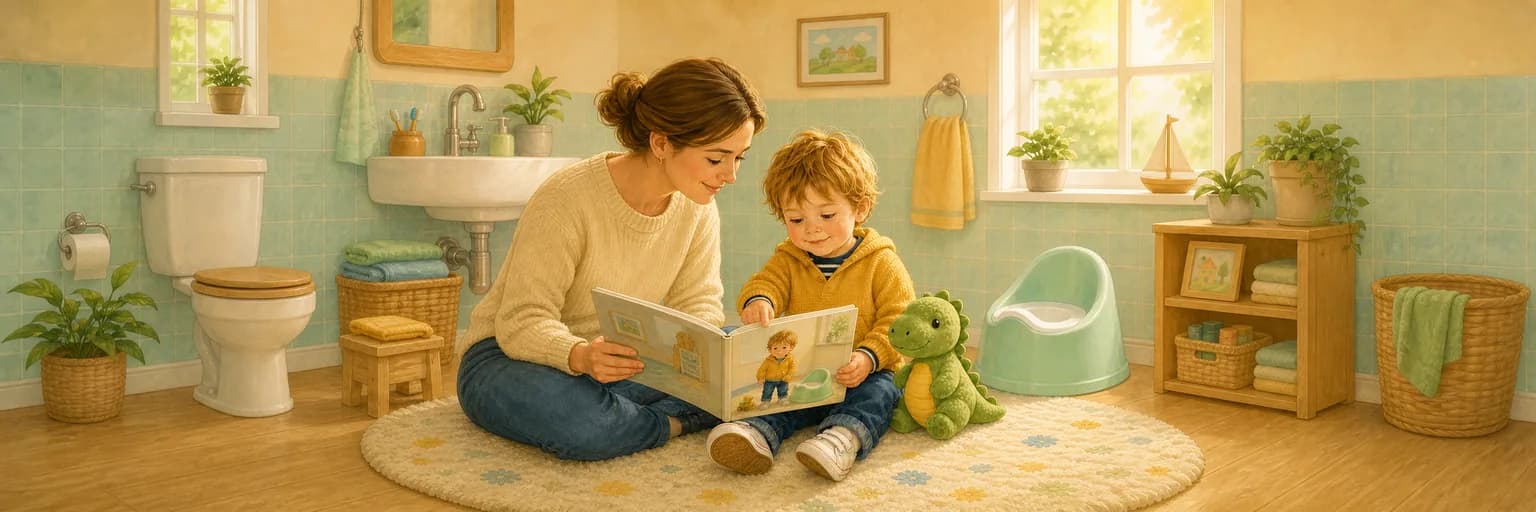
Starting potty training does not have to mean asking your child to practise on the potty straight away. Reading a book together can be a first introduction. On the sofa or before bed, you can make the subject familiar while nothing has to go right in that moment.
A story lets you look together at what a potty is, what it feels like when a wee is coming, and what happens when you give it a try. In a personalized story, your child is the main character. Their name is part of the story, and the pictures show their appearance or a familiar cuddly toy. That makes it easier to talk about what happens and what the main character tries.
A book shows what is going to happen
Potty training involves several small steps. Your child has to notice that a wee is coming, stop playing, walk to the potty, pull down their trousers, sit, and wait.
To an adult, these actions naturally belong together. A toddler still has to discover how noticing a wee connects to stopping their game, walking to the potty, and sitting down. A story lets you look at that sequence calmly. The main character notices something, walks to the potty, and gives it a try.
You can point at the pictures together and describe what happens at home in your own words. There is no need to turn the book into a lesson. A brief comment such as “Look, he can feel a wee coming too” is enough. If your child only wants to point at the dinosaur toy or skip to the next page, that is fine as well.
Reading together takes pressure off practice
After the fourth time, a question like “Do you need the potty?” can start to feel rather big. During story time, the attention is somewhere else. You are sitting on the sofa or reading before bed, talking about somebody in a book.
That little bit of distance helps. Your child can say that Sam finds it scary, that his toy should go first, or that wet trousers feel unpleasant. There is no need to ask whether they feel the same. Sometimes they make the connection with home on their own, and sometimes they do not.
A book will not prevent a battle when your child genuinely does not want to try. Put it away if that happens. Reading should remain a calm moment, not a hidden instruction to sit on the potty after all.
Repetition makes the potty more ordinary
Toddlers can ask for the same story five evenings in a row. That may feel repetitive to a parent, but it gives a child something to hold on to. The pictures stay the same, the sequence stays the same, and the ending is no surprise.
This gives you a chance to repeat the words that belong to potty training: noticing the feeling, taking trousers off, sitting, trying, and washing hands. The words gradually become familiar. Your child does not have to carry out those steps today.
Use the same simple words you use in everyday life. If your family says “do a wee” and “do a poo”, keep saying that. Familiar language is more useful to a toddler than the perfect wording.
Your child is the main character
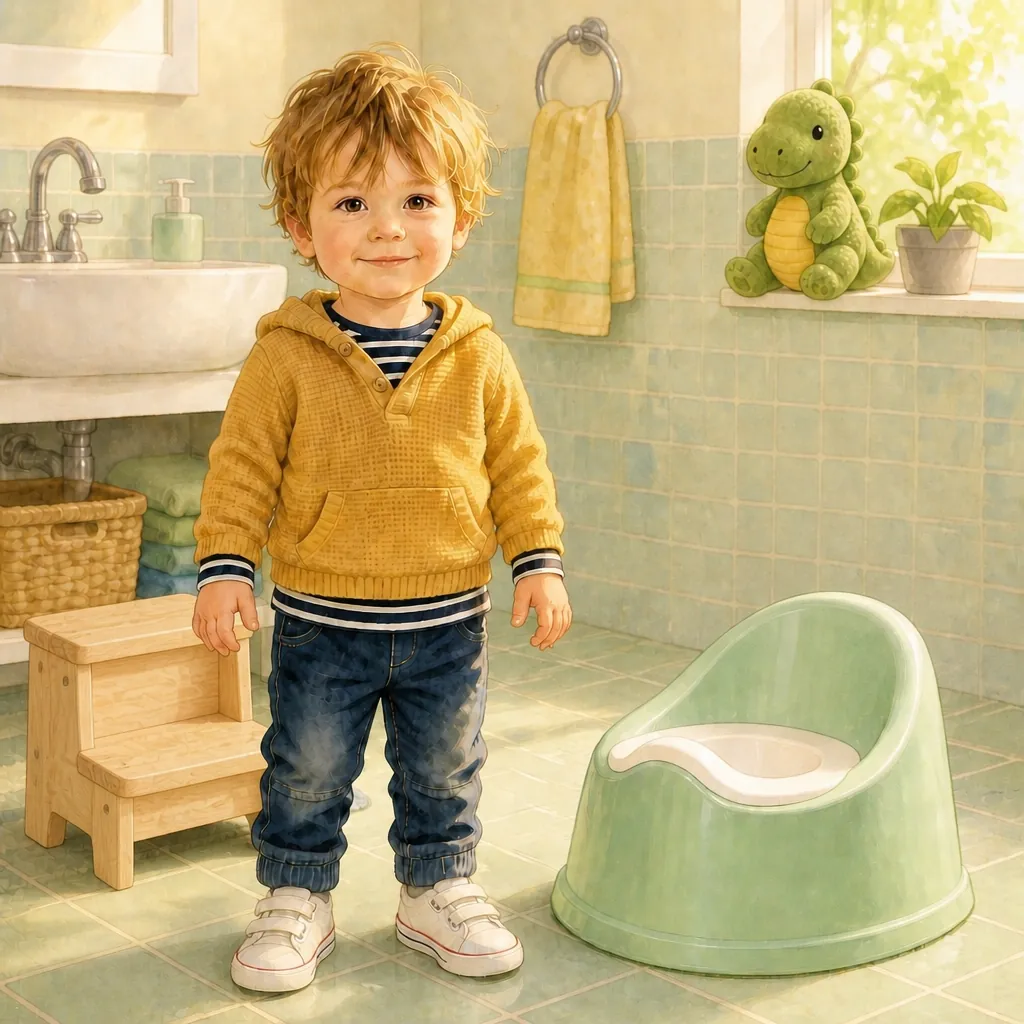
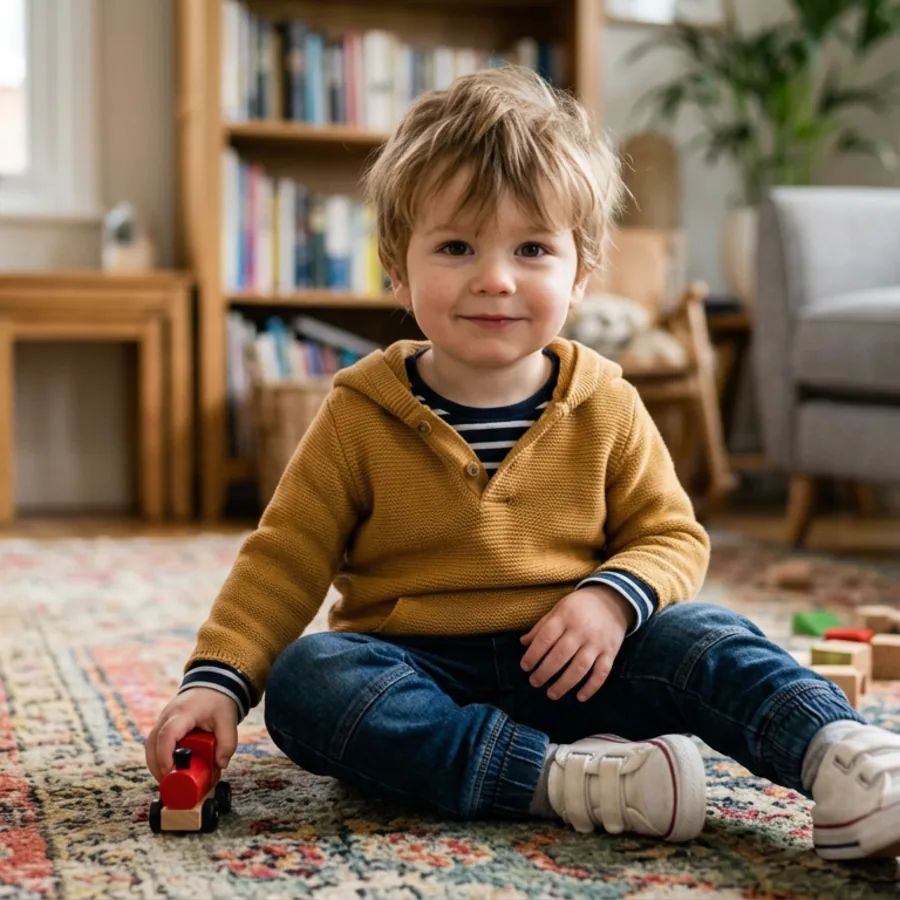
Your toddler’s name appears in the story. In the pictures, the main character has the same hair, the same cuddly toy, or that favourite yellow jumper. The story clearly concerns somebody from their own world.
Do not expect every child to suddenly sit still and listen. Sometimes the recognition does give you an immediate opening: “Hey, that is you. And Dino is trying first.” Your child can watch themselves practise without the real potty having to be ready beside them.
In our example book “Sam op het potje”, the green dinosaur toy first shows how it works. Sam then learns to notice when he needs a wee. He tries, something is allowed to go wrong, and eventually he succeeds. You can flip through the complete example book at the bottom of the page. Prices and frequently asked questions are on the potty training book page. If you want to compare other potty books first, see: The 5 best books about potty training.
Want to create a personalized book yourself?
Accidents belong in the story too
A story in which everything works on the first attempt may be pleasant to read. It does not look much like practising with a real toddler, though. That may include a wee beside the potty, trousers that come down too late, or a child who simply does not want to try today.
That kind of moment can be useful to read about together. An accident does not need to become a joke. The story simply continues afterwards: clean up, put on dry clothes, and try again later.
Do not look only for a cheerful ending. Check whether the book leaves room for things to go wrong without shame. A personal story can reflect your own child here. One child may want their cuddly toy to demonstrate first. Another mostly recognizes forgetting while they are busy playing.
Read when nothing has to happen
Keep the book with the other picture books and pick it up when your child wants it. Try not to save it for the moment after an accident or as a final attempt after a long discussion. On the sofa, after a bath, or before bed, your child can look and ask questions without having to practise immediately.
A book cannot decide when a child becomes toilet trained. It cannot make a child who is not ready become toilet trained any sooner. It can make the subject feel smaller: this is the potty, this is what the feeling might be like, an accident can happen, and tomorrow we can try again. How to approach the practising itself calmly is covered in How to potty train your child: 5 practical, low-pressure tips.
Want to know more about how your child’s appearance becomes part of a story? Read: What makes a children’s book with a photo really personal?. For practical ways to keep reading relaxed, see: Reading with silly voices: why funny dad voices are so much fun.
Frequently asked questions
- Can a book make my child potty trained?
- No. A book can make the potty and the steps around it feel familiar, but it does not determine when your child is physically and emotionally ready.
- When should you read a book about potty training?
- Choose a calm moment when nothing has to happen, such as on the sofa or before bed. This keeps the story separate from any pressure to use the potty immediately.
- Why does recognition help in a personalized book?
- In a personalized story, your child is the main character. Their name and appearance are part of the story, alongside a familiar cuddly toy. That makes it easier to talk about what the main character feels and tries.
Want to create a potty story in which your child recognizes themselves?
Make a personalized potty book€34.95 · preview your book before you payAbout the author
Lisa helps make every BoekjesAtelier book warm, recognizable, and enjoyable to read together. She focuses on the story, the experience, and the details that make it personal.
More about usRelated articles
These articles connect well with this topic.
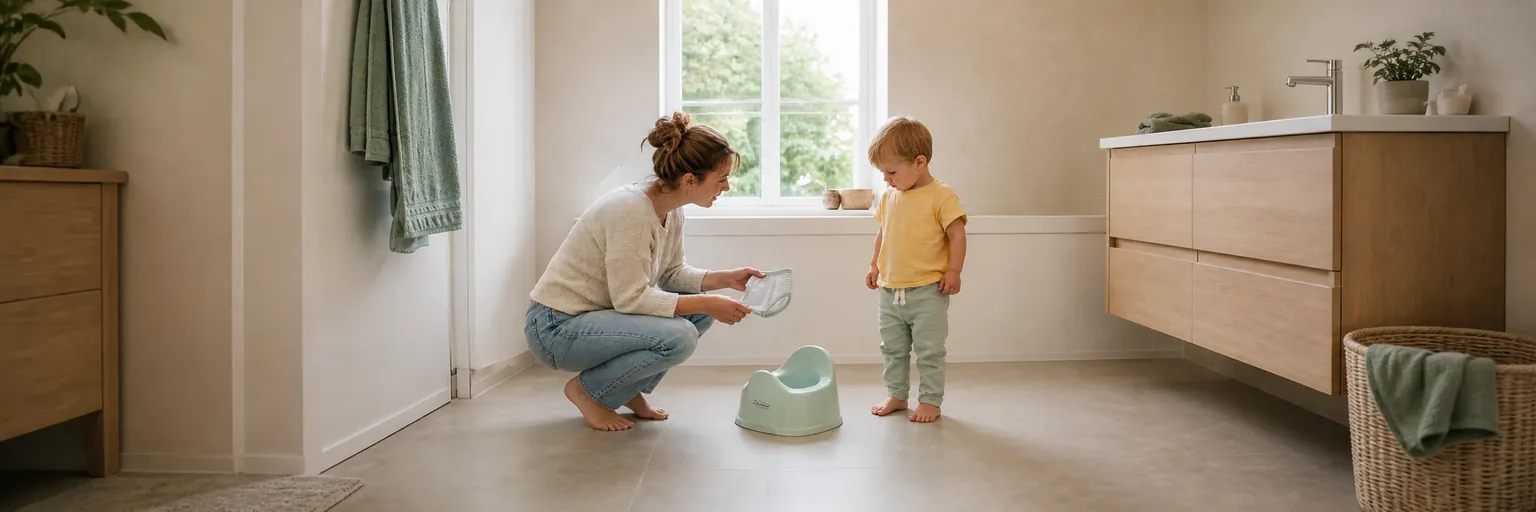
How to potty train your child: 5 practical, low-pressure tips
How can you tell when your child is ready, where do you start, and what should you do about accidents? Five practical potty training tips without unnecessary pressure.
Read article→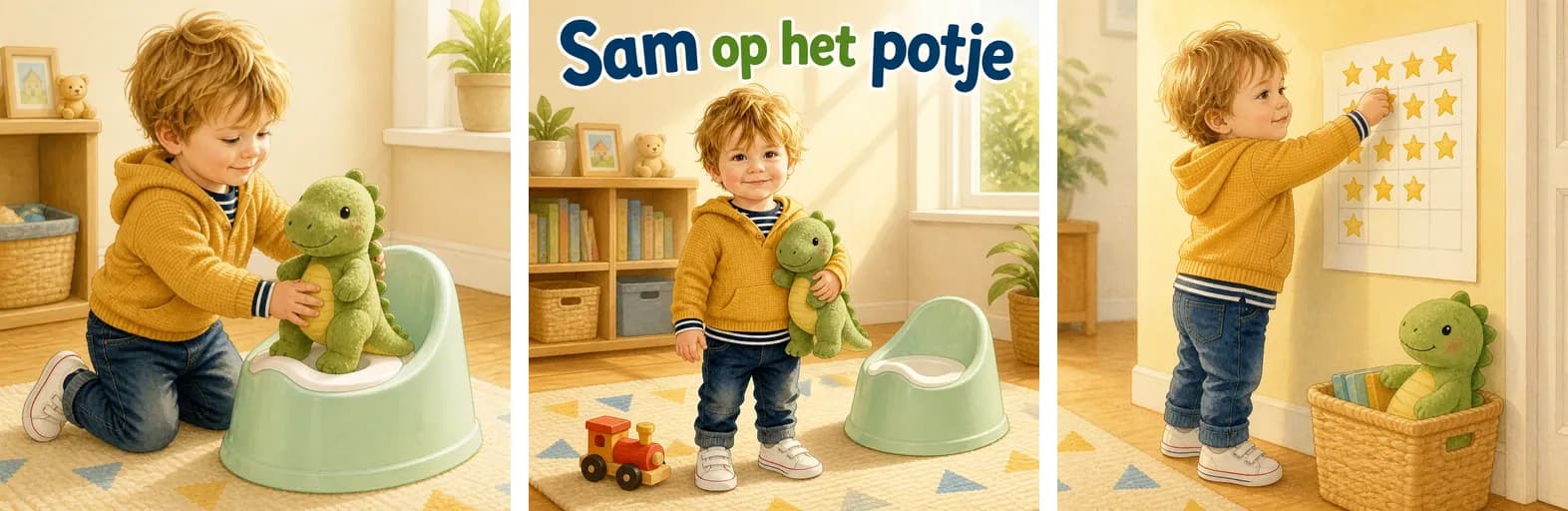
The 5 best books about potty training
From well-known toddler classics to a personal story starring your own child: five books that make potty training easier to talk about at home.
Read article→