
How to potty train your child: 5 practical, low-pressure tips
How can you tell when your child is ready, where do you start, and what should you do about accidents? Five practical potty training tips without unnecessary pressure.
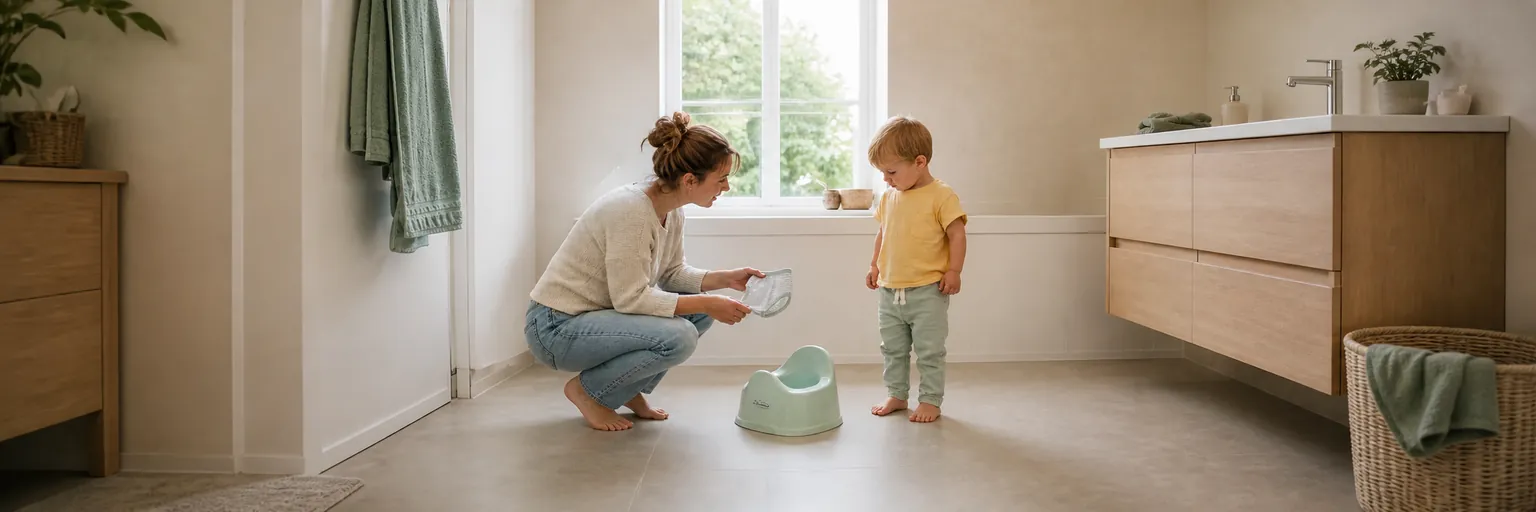
Many parents wonder when to start potty training. Should you wait for clear signs, or put a potty out before then? There is no single moment that works for every child.
This is not a trick your child has to master in one free Saturday. They are learning to notice the urge, stop playing in time, pull down their trousers, and sit calmly. A few practical changes can make that easier without turning every wee into a family project.
1. Watch your child, not just their age
There is no birthday on which every child becomes ready for the potty. Look at what your toddler is showing you. Does their nappy stay dry for longer, do they notice when it is wet or dirty, can they sit down by themselves, and are they interested in the toilet? Those are useful signs that you can start offering the potty.
You do not need to wait for every sign to appear at once. Interest is a helpful opening, but a child who loves copying adults can start getting acquainted with the potty too. Leave it where they can see it and let them sit on it fully clothed at first.
Choose a fairly calm period. The week of a house move, an illness, or a new baby already asks a great deal of a small child. For a fuller explanation of these signs, see Berkshire Healthcare on toilet training.
2. Make the potty easy and familiar
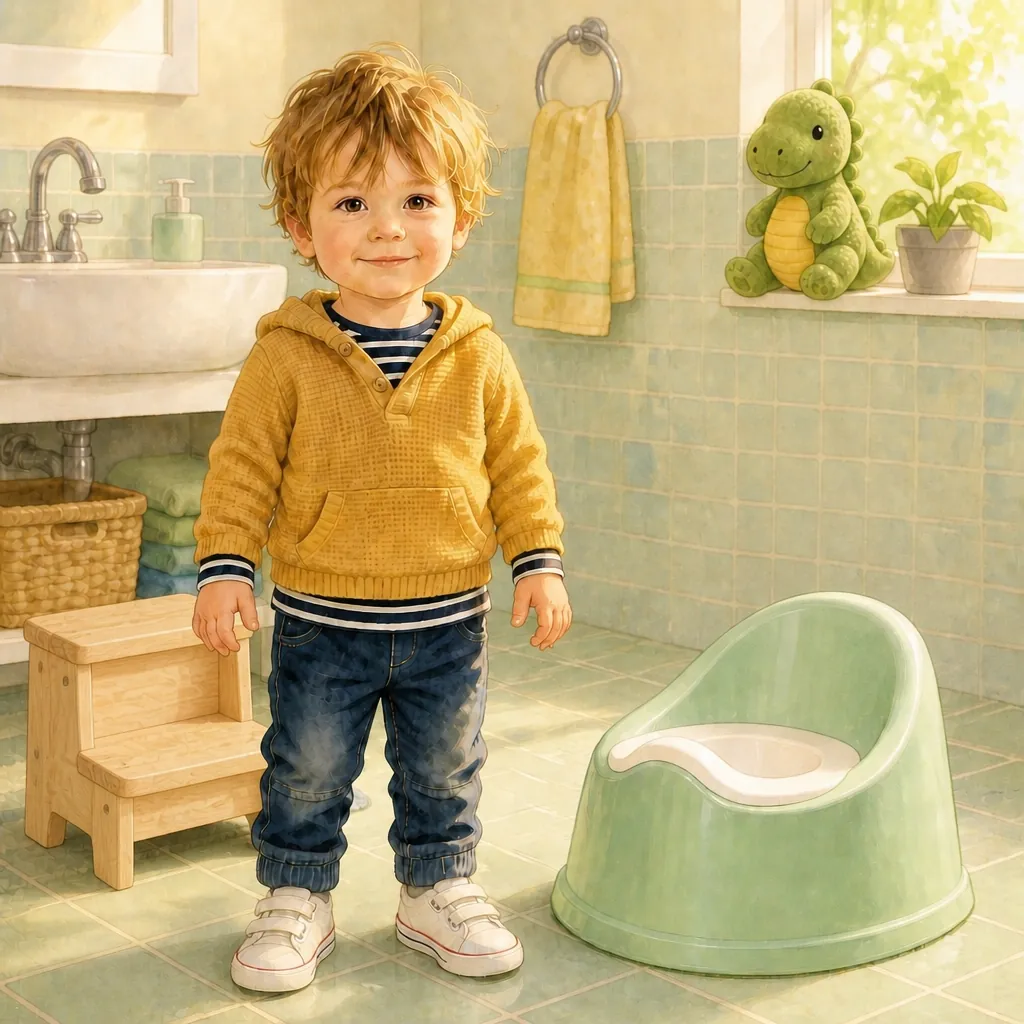
A simple potty with a wide rim is often enough. Your child can sit down independently and keep their feet firmly on the floor. If you go straight to the toilet, add a child seat and a footstool. Dangling legs feel unsteady and make it harder to relax for a poo.
Keep a few pairs of trousers nearby that come down without buttons or awkward zips. That lovely pair of dungarees can stay in the wardrobe for a few weeks. When a wee is already coming, three stubborn buttons are simply too much work.
Show your child what happens as well. Let them come with you when you use the toilet if that feels comfortable for your family. Talk about wees and poos in ordinary words, and let your toddler flush if the sound does not frighten them.
3. Practise at predictable moments
A toddler absorbed in a tower of blocks may notice the urge only when it is too late. Offer the potty at natural moments instead: after waking up, after a meal, before leaving the house, or when you return home.
Keep it brief. Sitting calmly for a few minutes is enough. If nothing happens, get up and carry on with the day. Waiting until a wee appears at any cost quickly turns the potty into a place your child no longer wants to sit.
After a few days, look for patterns. Your child may often poo after breakfast or wee soon after their afternoon nap.
Their own rhythm is more useful than setting an alarm every two hours. For broader advice on teaching everyday skills, including potty use, see NHS advice on everyday skills.
4. Pay attention to the attempt
Praise works best when it names something your child did: “You noticed that you needed a wee” or “You sat down and tried.” Success then means more than keeping their trousers dry.
Some children enjoy putting a sticker on a chart. Keep the step small, such as one sticker for telling you or giving the potty a try. A large present after seven dry days can add a great deal of weight to a skill that is still unpredictable. Try not to ask every fifteen minutes whether your child needs a wee either. By the sixth question, “no” may simply be the only part of the process a toddler still controls. You can offer, but pressure rarely helps.
Want to create a personalized book yourself?
5. Choose a tool that suits your child
One toddler may want to put a doll on the potty first. Another likes looking at a picture book about wees and poos. These tools show the steps at a moment when your child does not have to perform anything themselves.
You can also create a personalized hardcover book in which your child is the main character. The illustrations are generated by AI from a photo. A sibling, parent, pet, or cuddly toy can join as a sidekick. Their familiar dinosaur can try the potty first, followed by your child in the story. You can review the complete book for free before paying.
A story cannot potty train a child. It can make the potty more familiar and give your family words for what is happening. Read more about that role at Why a personalized book helps with potty training. If you want to compare standard and personalized potty books, see The 5 best books about potty training.
What to do after accidents and setbacks
Wet trousers are part of practising. Stay calm, find dry clothes, and briefly explain what happened: “Your wee came already. We will try the potty again next time.” Shame will not help a child notice a full bladder any sooner.
If accidents suddenly become more frequent, consider what else is going on. Tiredness, stress, a new nursery room, or being completely absorbed in play can all make a temporary difference. If every attempt becomes a battle, take a few weeks off.
Pay particular attention to pooing. Hard stools, pain, holding back, or marks in your child’s underwear may be signs of constipation. Ask your health visitor or GP for advice. The NHS covers the symptoms and when to get help here: NHS advice on constipation in children.
Frequently asked questions
- When should you start potty training?
- Start when your child shows interest in the toilet or potty, notices a wet or dirty nappy, and can sit reasonably steadily. Choose a calm period without major changes if possible.
- How often should you put a child on the potty?
- Offer the potty at predictable moments, such as after waking and after a meal. Let your child sit for a few minutes and try again later if nothing happens.
- What if your child refuses to use the potty?
- Do not force them or turn it into a long discussion. Keep the potty visible, talk about it calmly, and take a few weeks off if every offer is met with resistance.
Want to make the potty familiar with your child and a trusted sidekick in the story?
Make a personalized potty book€34.95 · preview your book before you payAbout the author
Lisa helps make every BoekjesAtelier book warm, recognizable, and enjoyable to read together. She focuses on the story, the experience, and the details that make it personal.
More about usRelated articles
These articles connect well with this topic.
Why a personalized book helps with potty training
A book is a calm, low-pressure way to introduce your child to potty training, without asking them to practise straight away.
Read article→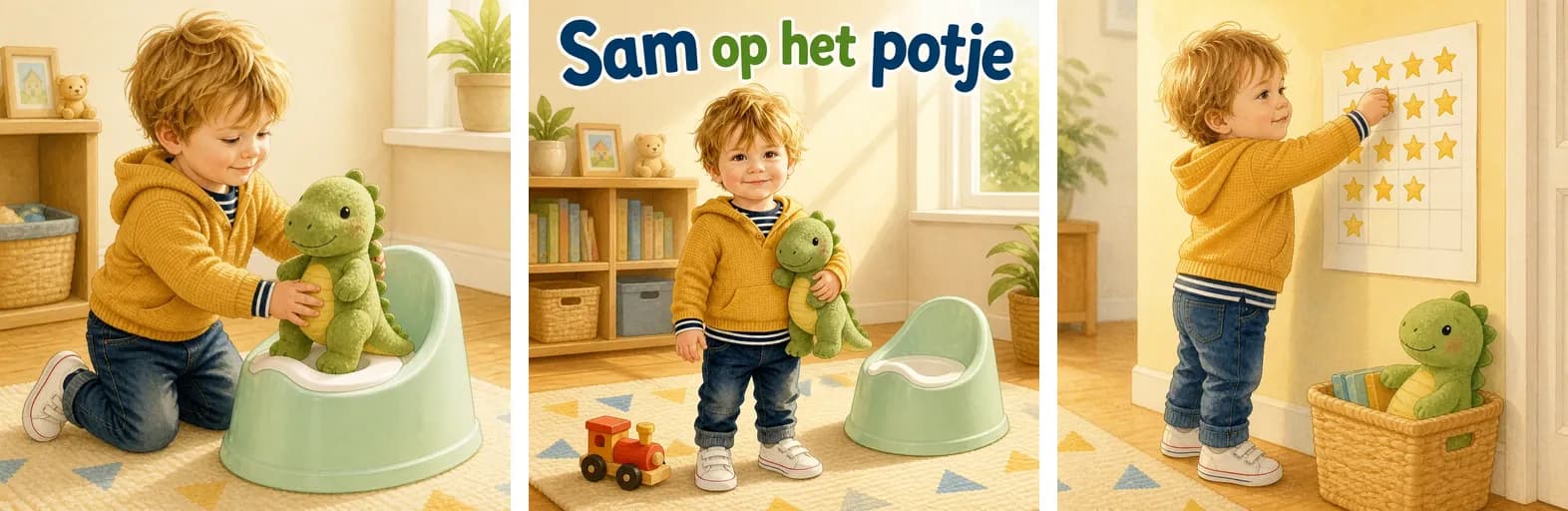
The 5 best books about potty training
From well-known toddler classics to a personal story starring your own child: five books that make potty training easier to talk about at home.
Read article→