
Reading aloud to toddlers: when to start, how long and which books?
Reading aloud to toddlers does not have to take long. You can start sharing books in infancy and try a few minutes at a time with your toddler. Choose books that suit your child’s age and interests, and make it a daily moment together if you can.
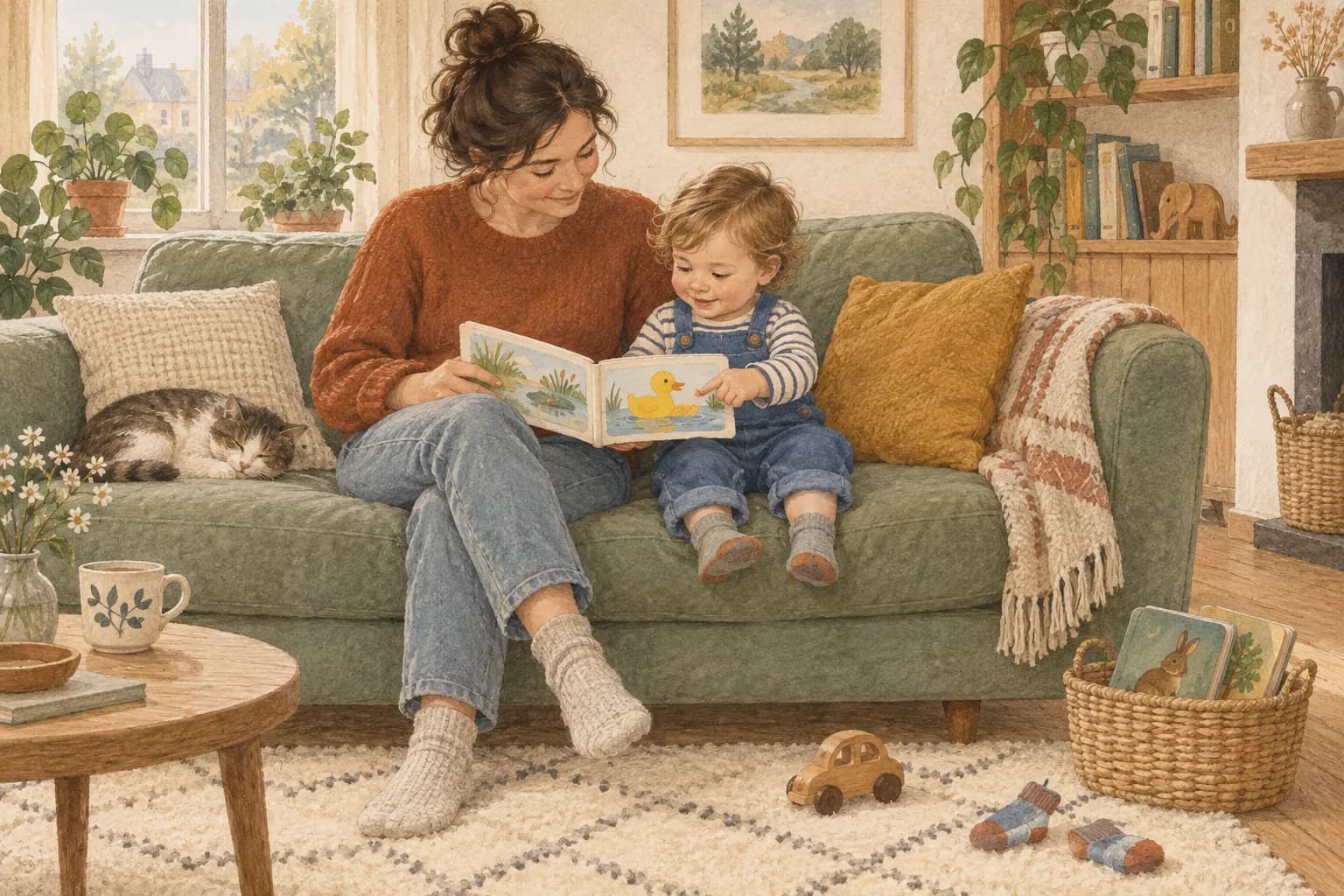
Reading is part of bedtime in our house. We started early with baby books, mostly touching and looking. Then came the Miffy books we bought at a King’s Day flea market.
Sharing a book does not have to mean reading a whole story from the start. Looking at one picture together and talking about it counts too.
At what age can you start reading aloud?
You can start in infancy. There is no need to wait until your child can talk or follow a story. A baby hears your voice and looks with you. The Dutch Reading Foundation recommends starting early and continuing to read together: the Dutch Reading Foundation’s advice on starting early (in Dutch).
With a baby, try looking at a cloth book and talking about what you see. With a one-year-old, point to a shoe or a dog. As your toddler grows, you can try a simple story. There is no particular birthday when that change has to happen.
How long should you read to a toddler?
Try starting with five minutes. That is a practical suggestion, not a minimum your child has to reach. If they lose interest after two minutes, you can close the book. If they want more, keep going for as long as you both enjoy it.
For a two-year-old, try one short book or just their favourite pages. Two brief reading moments may suit your day better than one long story. At three, you can try a little more text. BookTrust suggests ten minutes of shared reading a day for children aged three to four: BookTrust’s reading tips for ages three to four. Think of those ten minutes as a guideline. A shorter session is fine if your child has had enough.
How often should you read together?
Try to find a small moment every day. You could leave a book beside the pyjamas so you notice it after getting changed. If evenings are difficult because your child is already tired, try after breakfast.
In our house, books now come out during the day too. Our son runs to the bookcase himself several times a day. We keep his books where he can reach them on his own.
Giving reading a regular place in your day helps it become a habit. That fits the advice from BoekStart’s tips on sharing books (in Dutch). Missed a day? Just pick up a book again tomorrow.
What if your toddler will not sit still for a story?
Sitting still on your lap does not have to be a condition of sharing a book. Try putting it on the floor beside the toy cars. Perhaps a car will drive towards the garage in the picture. You can respond to that and let the story wait.
You could also try these ideas:
- Offer a choice of two books and let your child turn the pages.
- Talk about what your child points to and pause for a response.
- Copy one animal sound or movement and see if your child wants to join in.
- Put the book away when your child clearly wants to do something else.
Which books suit a one-year-old?
Sturdy board books with clear pictures are a useful place to start. Look for things from everyday life: a cat, a cup, shoes by the door. A book of pictures to point at has no story you need to finish. You can stay with that one cat.
BoekStart describes pointing and naming at its guide to reading with children aged 12 to 16 months (in Dutch). A touch-and-feel book is another option for a child who likes exploring with their hands.
Our son also enjoys books with music and sounds. He likes pressing the buttons on the pages himself.
Which books suit a two-year-old?
Try a short picture book about something familiar, such as going to bed or an animal losing a favourite object. Look for illustrations that show what is happening. A repeated phrase gives your child something to join in with.
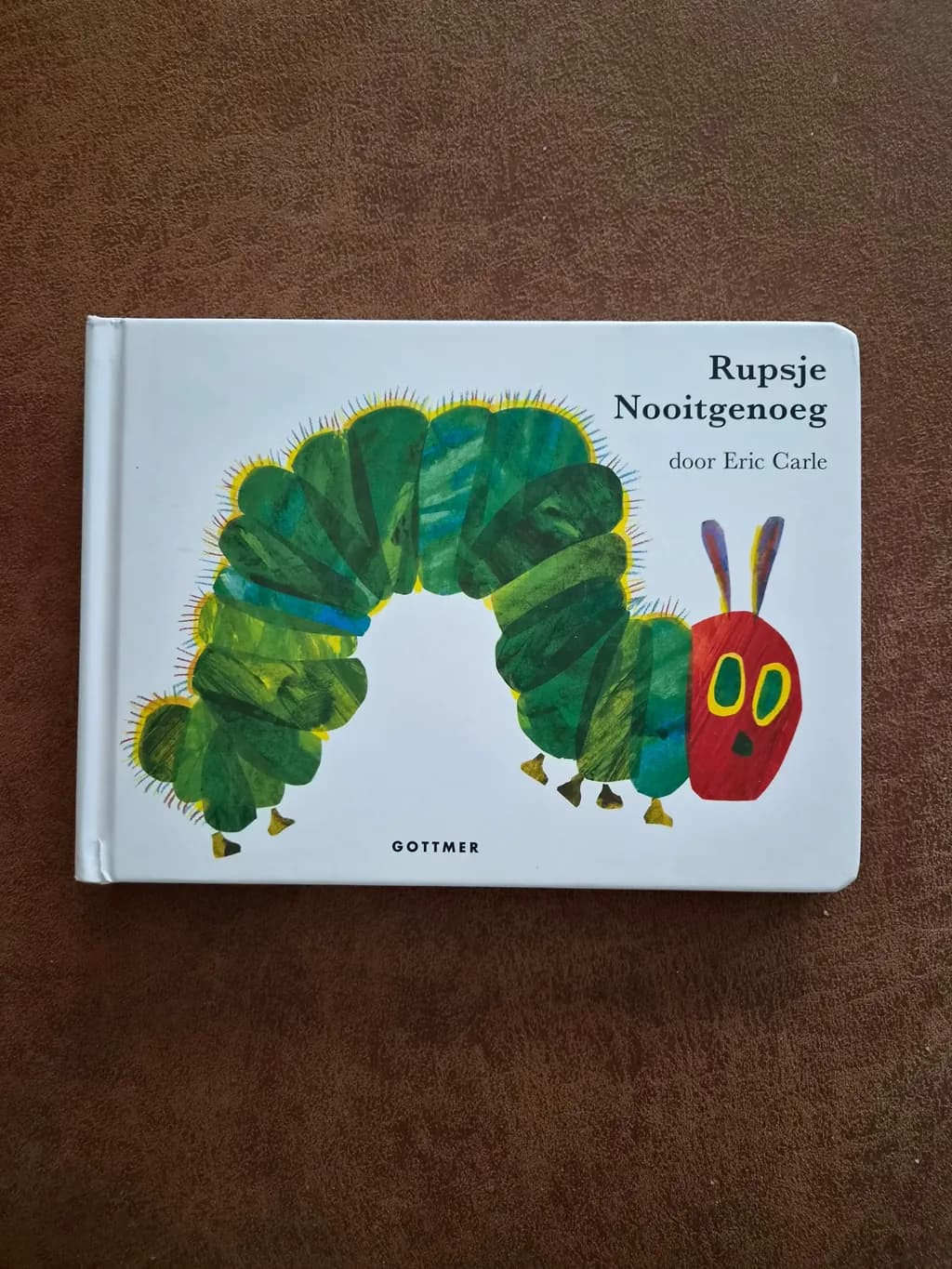
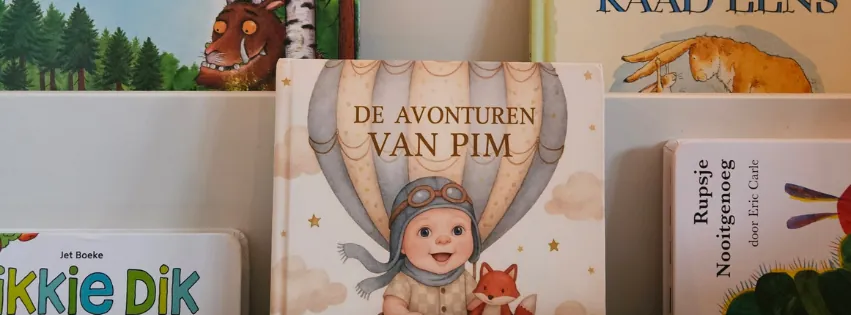
A book such as the Dutch title Dikkie Dik op de boerderij gives you animals to point out. With The Very Hungry Caterpillar, you can start by looking at the food and read more of the story later. The age on the back helps you browse, but watch how your child responds.
Which books suit a three-year-old?
At three, try a story with a small problem and a resolution. A search-and-find book is still an option: looking for a hidden cat gives you plenty to talk about.
The Gruffalo may suit a child who enjoys repetition and a little suspense. If the monster frightens your child, choose something else. We describe these books in more detail in Our favorite children's books for babies and toddlers. These age groups are a guide. Pay attention to what your child enjoys too.
How do you choose a book that suits your child?
Notice what catches your child’s attention today. If every passing rubbish truck stops them in their tracks, try a book about vehicles. If they love hide-and-seek, try a search-and-find book. A library lets you explore different kinds before buying anything.
Look at two pages together. Is there something to point to? Does the amount of text feel comfortable? Does your child want to go back to a picture? That tells you more than an age label alone.
Reading the same book again is fine. BoekStart explains how children keep discovering things through repetition: its reading tips for children aged 20 to 24 months (in Dutch). For a little variety for yourself, try giving one character a voice. There are ideas in Reading with silly voices: why funny dad voices are so much fun.
Can familiar details help a child engage with a story?
A familiar detail gives you something to talk about. The bear needs boots, just like your child did this morning. Or the rabbit has lost a cuddly toy. You could say, “Your teddy was under the blanket.” Do not expect a long conversation. A glance or a pointing finger is a response too.
These days, we mostly read our own BoekjesAtelier books, in which our son recognises himself. The Dutch edition of “Guess How Much I Love You” is another book we read at bedtime.
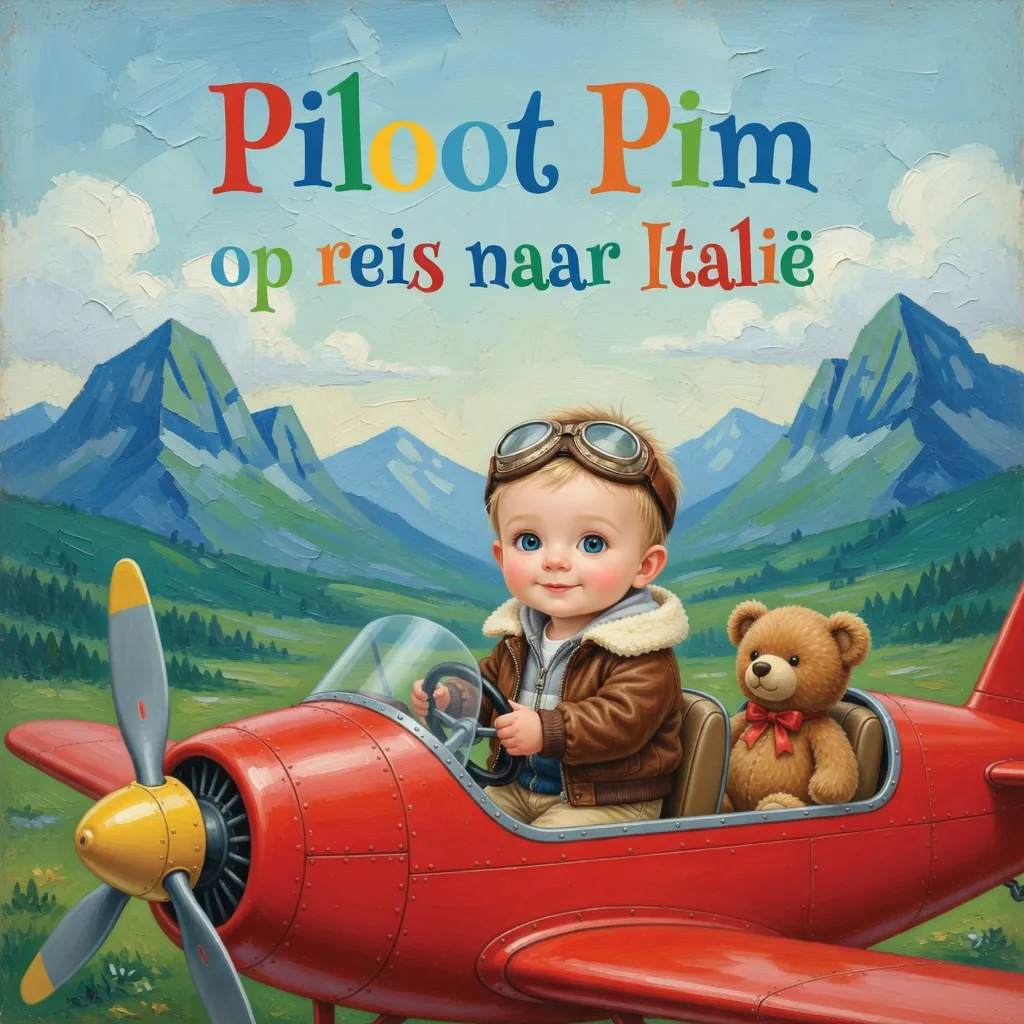
In our books, your child takes the lead role and the illustrations are made with AI using a photo. You can see how that works in What makes a children’s book with a photo really personal?. Even a book like this will not hold every toddler’s attention every time.
Leave one book on the sofa for tomorrow. Let your child choose where to start, even if it is the same book again.
Frequently asked questions about reading to toddlers
- Is reading worthwhile if my child cannot talk yet?
- Yes. Your child can listen, look and respond without using words. Talk about a picture and leave space for them to point or make a sound.
- Do we have to finish the book?
- No. You can read a few pages or stay with one picture. Stop when your child has had enough. Next time, start again or turn to another page.
- Should I ask questions while reading?
- You can, but it does not need to become a quiz. Try making a comment yourself and waiting. If your child asks something or points, respond to that.
- Is bedtime the best time to read?
- Only if it is a comfortable time for you both. A book after breakfast or on a quiet afternoon works too. Try another time if your child is too tired in the evening.
Want to see a book with your own child in it?
Preview your own book€34.95 · preview your book before you payAbout the author
Lisa helps make every BoekjesAtelier book warm, recognizable, and enjoyable to read together. She focuses on the story, the experience, and the details that make it personal.
More about usRelated articles
These articles connect well with this topic.
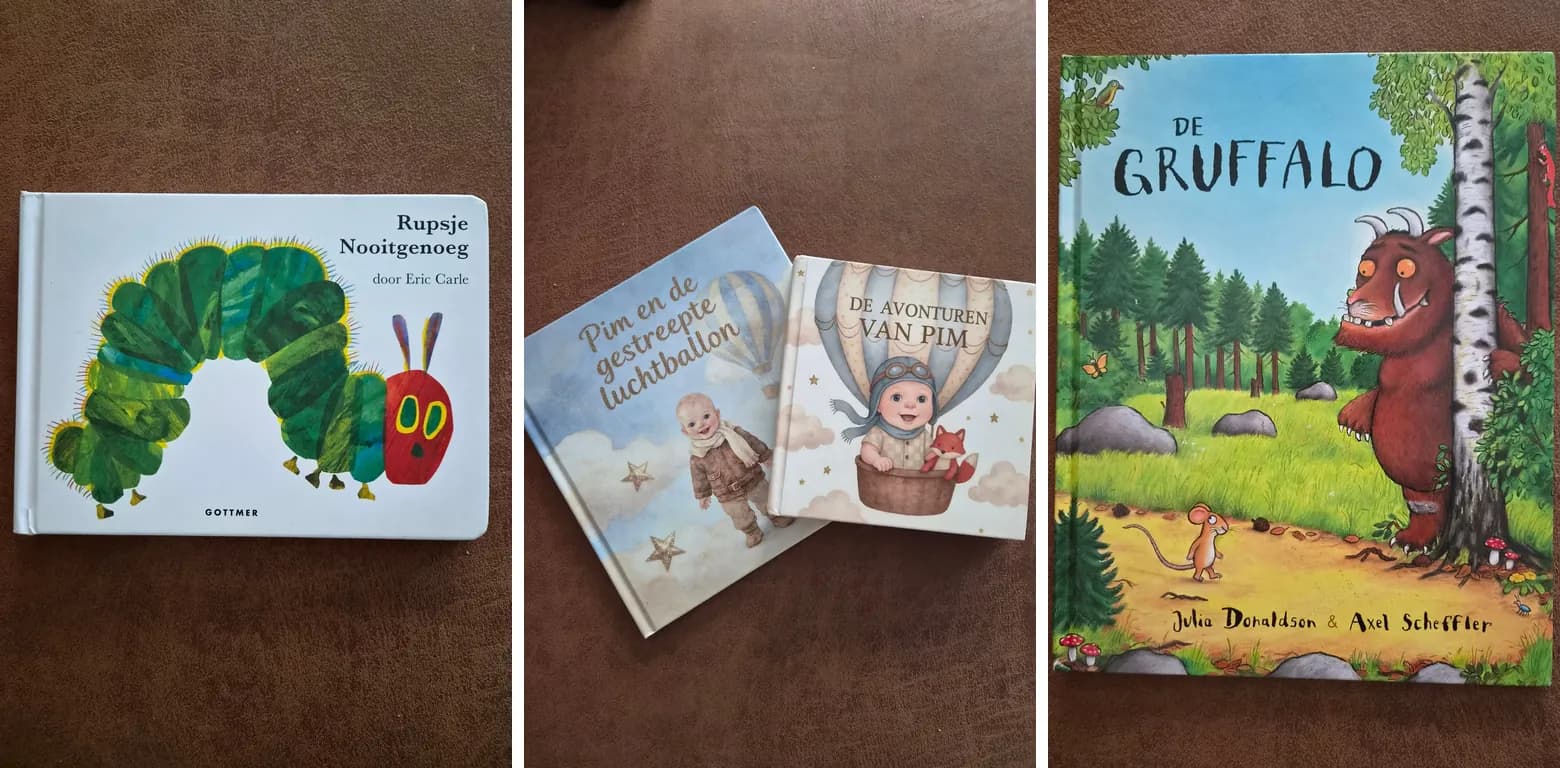
Our favorite children's books for babies and toddlers
From The Very Hungry Caterpillar to The Gruffalo and our own personalized book: these are the children's books that keep coming off the shelf in our home.
Read article→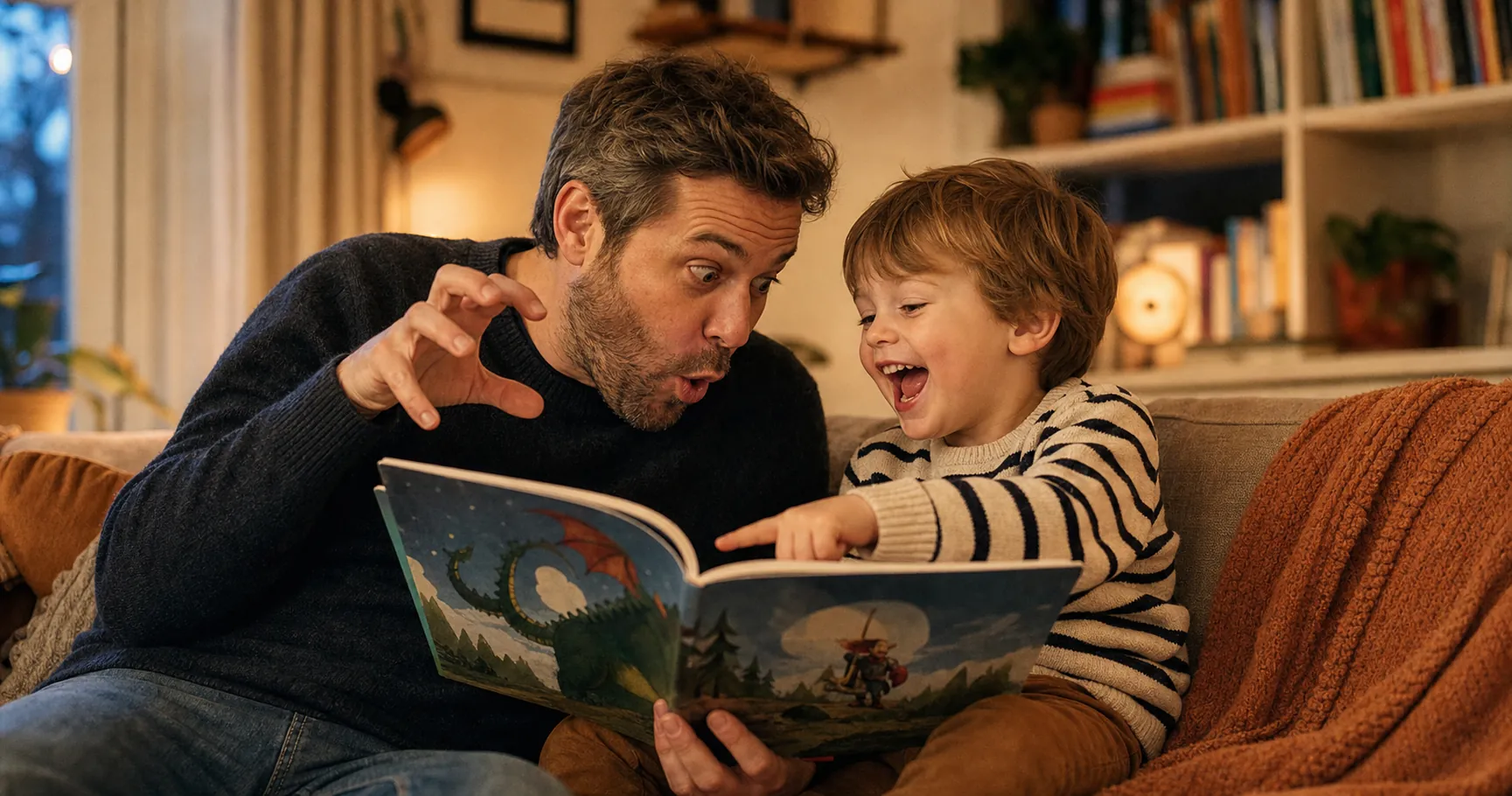
Reading with silly voices: why funny dad voices are so much fun
Reading with silly voices does not have to be perfect. A grumbly bear or whispering pirate can turn story time into a little game together.
Read article→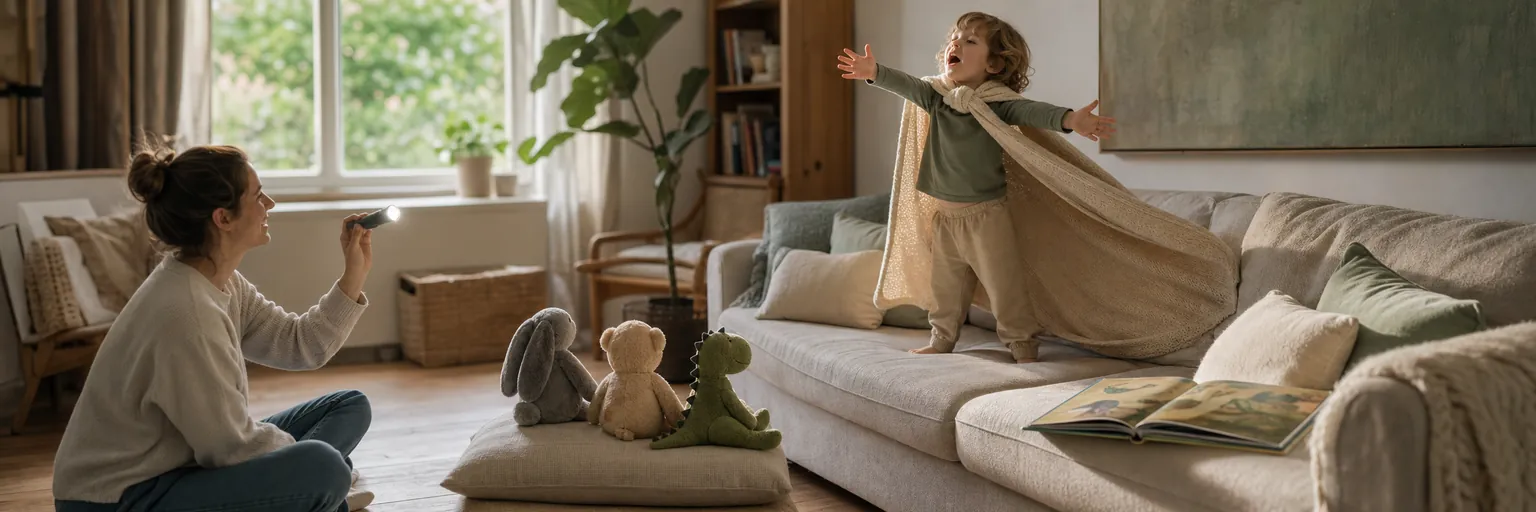
Kinderboekenweek 2026 at home: 6 ideas for toddlers and preschoolers
Kinderboekenweek, the Dutch Children’s Book Week, runs from 30 September to 11 October this year, with the theme Spot aan! You do not need a big plan at home. Six ideas that fit a sofa, a torch and a toddler.
Read article→