
The History of Personalized Children's Books
From a name in a book to fully personalized children’s stories. This is how personalized children’s books evolved over the years.
Personalized children’s books have existed longer than many people realize. What once started with simply writing a name in a book has grown into fully personalized books in which children really take center stage.
For us, this is not an abstract development. BoekjesAtelier began with our own book for Pim, inspired by his birth announcement with a blue hot air balloon. How that first book came about is in Where It All Began: The Adventures of Pim. Only while making that first book did we realize how big the difference is between “a name in a story” and a book where a child, the atmosphere of the family, and small recognizable details really come together.
Below we walk through that evolution, from what we see while building BoekjesAtelier ourselves: personalization only becomes valuable when a child recognizes themselves and parents still have enough control over the final result.
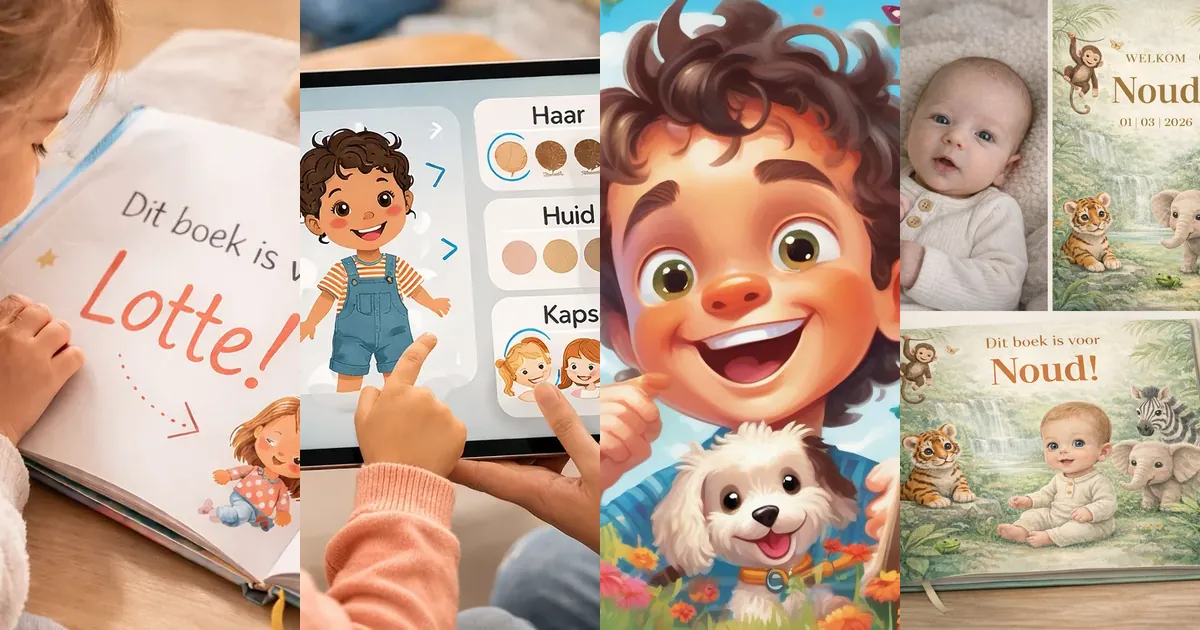
A Name in the Book
Children write their name in the book or see themselves through a small mirror.
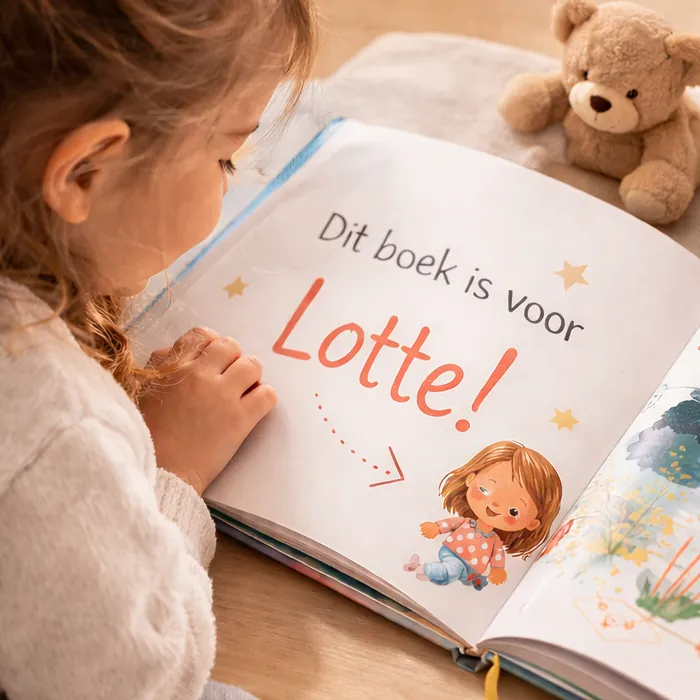
Choosing a Character
Parents choose from a set of traits such as hair color, skin tone, and hairstyle.
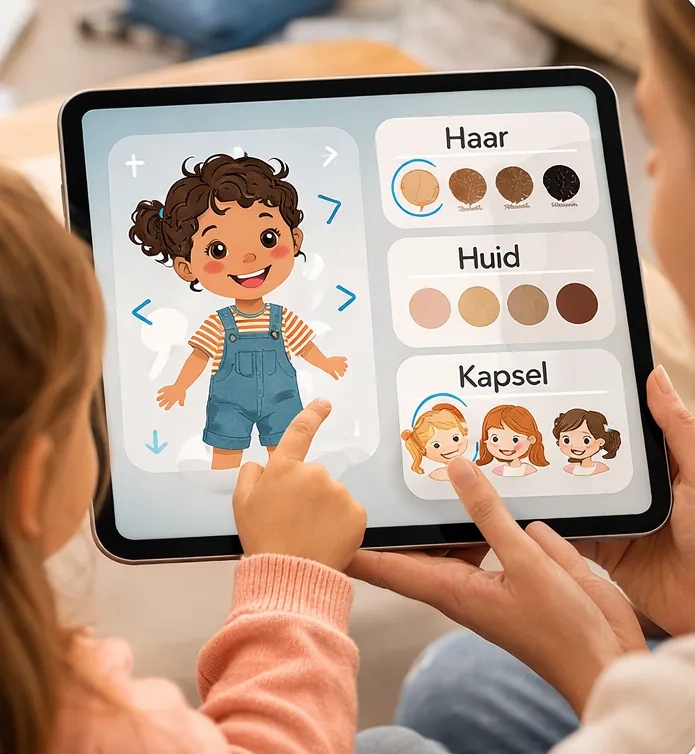
First AI Children's Books
A character is generated based on a photo of the child.
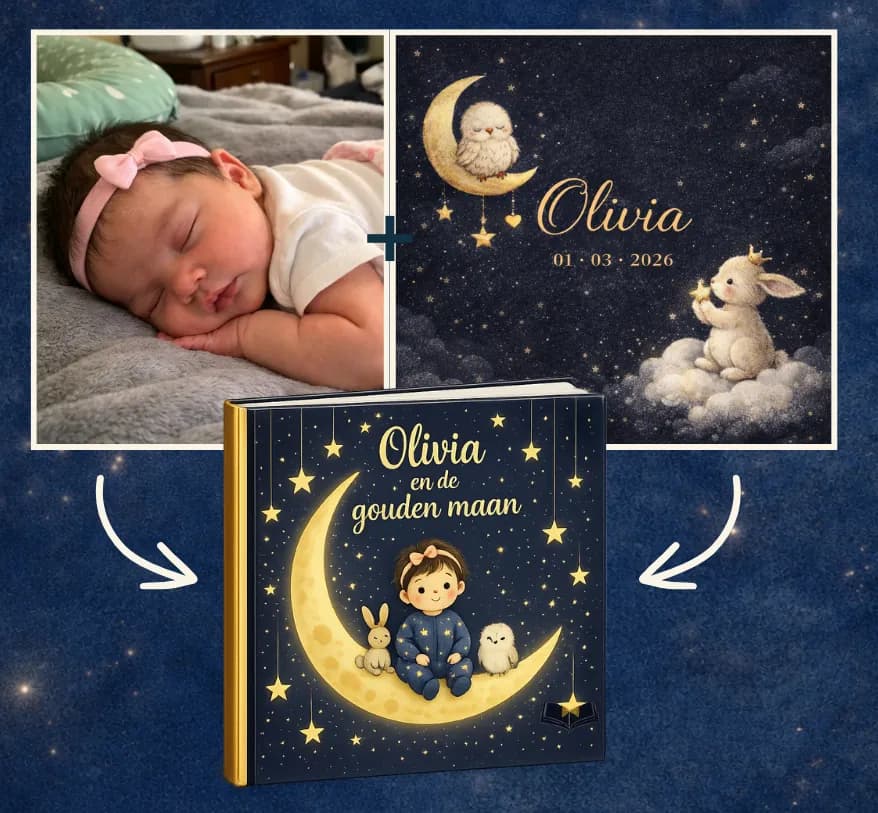
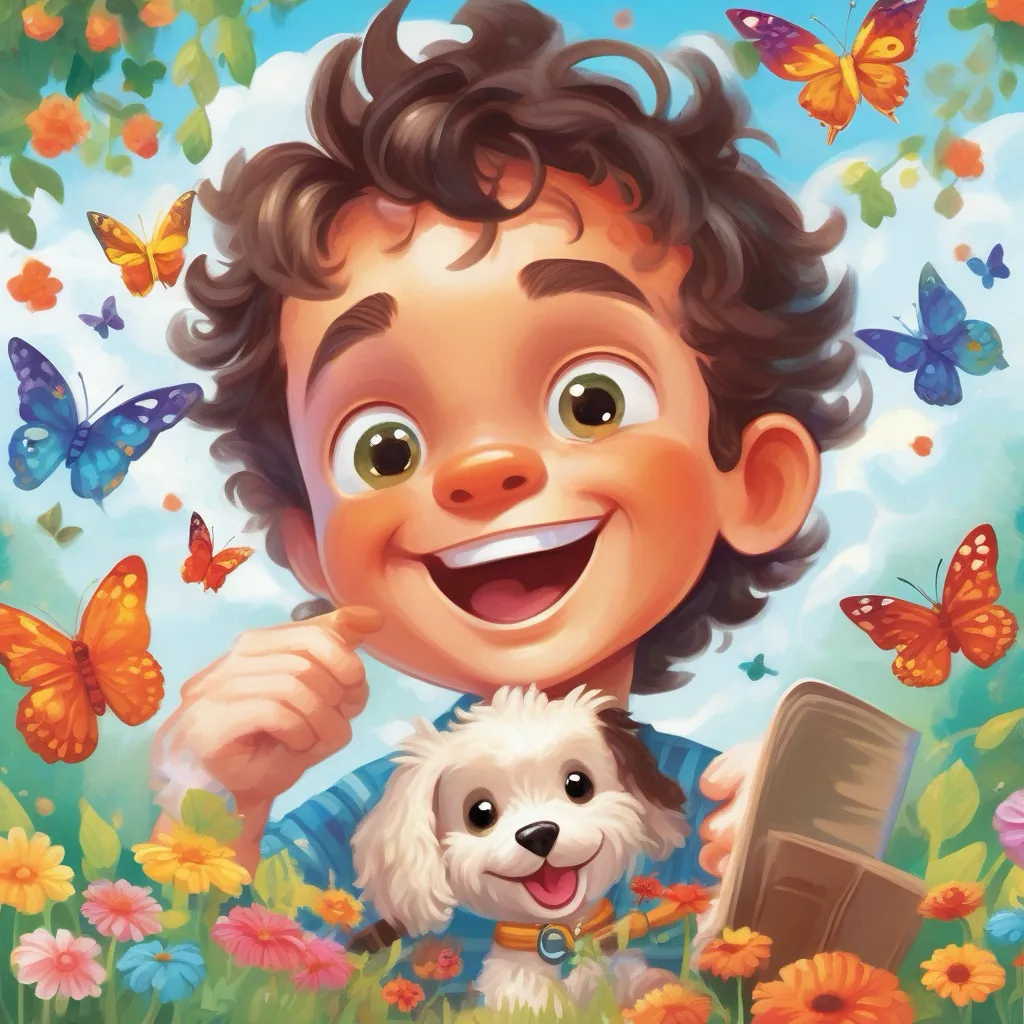
Fully Personalized Books
The story and illustration style are customized too.
1. A Name in the Book
The first form of personalized children’s books was actually quite simple: your name was added to an existing story.
Many parents still remember the little books where you could write in the child’s name yourself. Sometimes the personalization went a small step further: some books included a small mirror, so the child could see themselves as the main character.
Later, online publishers emerged where the name was printed directly into the book. Yet the core remained the same: the same story, the same illustrations, the same main character. In the end, only one thing changed: the name.
2. Choosing a Character
The next step was being able to choose the appearance of the main character. You could select: boy or girl, skin tone, hair color, and hairstyle.
This gave parents a bit more control over how the character looked, and children could better identify with it. Yet personalization was still limited to a few preset options. The book remained a standard story with a customized character.
3. The First AI Children's Books
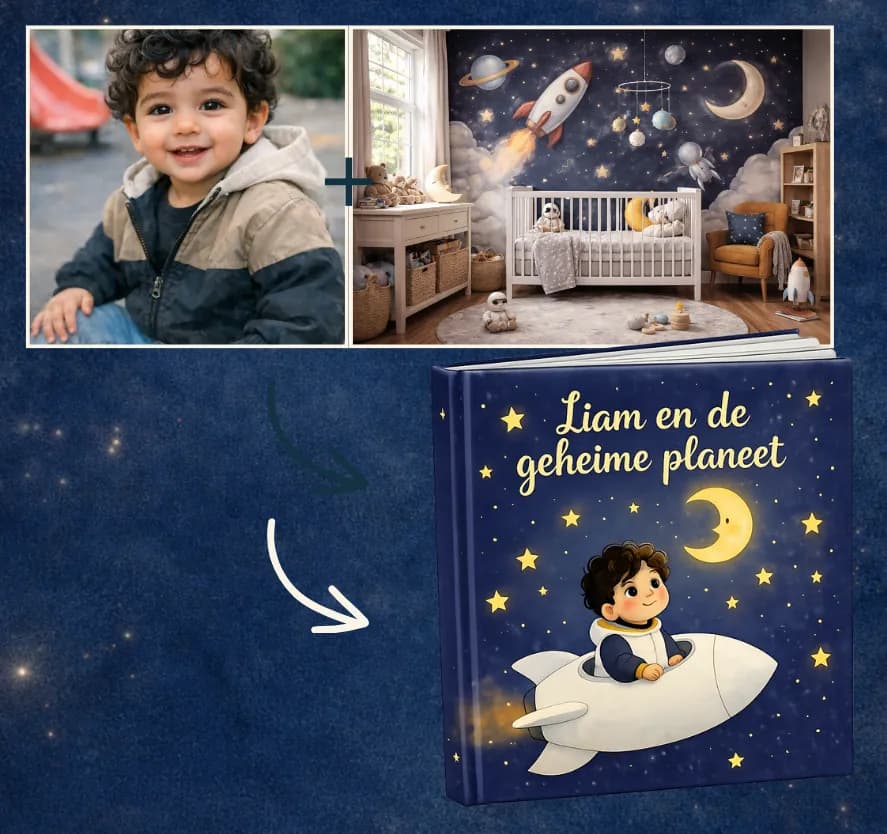
With the rise of AI, a new generation of personalized children’s books emerged. Instead of pre-designed characters, a book could now be created based on a photo of the child. That was a big leap forward: the main character could actually resemble the child.
But while building BoekjesAtelier, we also saw quickly where AI alone is not enough. A beautiful image is not the same as a good children’s book. In our early tests, we sometimes got individual illustrations that looked nice on their own, but did not work as a book: the face shifted a little too much, the outfit changed from page to page, or the story felt like a theme had been filled in rather than something made for a real child.
That made us much stricter about continuity. The character has to stay recognizable from page to page, the style has to feel coherent, the story has to fit the child’s age, and parents need to see what is being made before they order. That preview step is essential to us. With a book about your own child, you do not want to hope it turned out well. You want to check it.
That is why we do not see AI as a button that automatically creates a perfect book. We see it as a tool that only works well when clear choices sit around it: fixed steps, review moments, safe photo handling, and room to adjust text or images. AI made personalization possible, but the real quality comes from combining technology with parental control.
4. The Latest Generation: Fully Personalized Children's Books
The newest development goes even further. Instead of just a name or character, the entire book is tailored to the child: a main character based on a photo, personalized story inspiration, and a narrative that connects to the child’s interests and life details.
At BoekjesAtelier, personalization happens on three levels: character, story, and illustration style. That came directly from our own experience with Pim’s book. His birth announcement gave the whole book a feeling: airy, soft, adventurous. Later, we saw the same with examples from parents: a nursery with airplanes, a stuffed animal that goes everywhere, or a birth announcement card that had clearly been chosen with care. Those details are often more useful than a long list of preferences. What exactly gets personalized with us is explained in What makes a children’s book with a photo really personal?.
What matters to us: personalization should not feel like randomly stuffing as many details as possible into a story. A tractor, stuffed animal, or birth announcement only works when it appears naturally. So to us, the latest generation is not about “filling in more fields”; it is about choosing better: which details make the book recognizable, warm, and readable?
In practice, that also means we should not only ask parents for input at the start. They need to see, compare, and adjust the result. That is why customers receive a preview of every page before ordering. For us, that is an important difference from AI products that mainly promise everything will happen automatically. With a children’s book about your own child, you should be able to look along.
Want to create a personalized book yourself?
A great example of this is the book we made based on Yara's birth announcement: fully in the style of her card, with a character that really looks like her.
What Does the Future Hold?
The technology behind personalized children’s books is evolving rapidly. We expect the biggest change to be better collaboration between parent and system, more than better AI illustrations.
That is also how we want to keep building BoekjesAtelier. We test every new feature against the same question: does this help parents make a better book for their child, or does it only make the technology feel more impressive? Adding a sidekick, like a stuffed animal, grandparent, or sibling, feels valuable because it reflects how children experience their world. Adding more controls without a clear purpose does not.
In the future, personalization will likely become more specific: a story that better accounts for the child’s age, family situation, favorite rituals, the tone parents prefer, and the moment the book is meant for. At the same time, we think boundaries will remain important. Not every detail belongs in a book. Not every AI suggestion makes a story better. And when children’s photos are involved, safety should stay more important than speed.
Our direction is clear: use AI to make something possible that used to be too expensive or too time-consuming, while keeping the final book human, reviewable, and suitable for reading aloud. What once started with a name in a book is growing into something bigger: a story that is really about your child, without making it feel like the technology has taken over.
Curious what a personalized children's book could look like?
Create your own book here€34.95 · preview your book before you payAbout the author
Wouter builds the platform and technical foundation behind BoekjesAtelier. As a parent and with his cybersecurity background, he pays extra attention to privacy, safe processing, and clear product choices.
More about usRelated articles
These articles connect well with this topic.
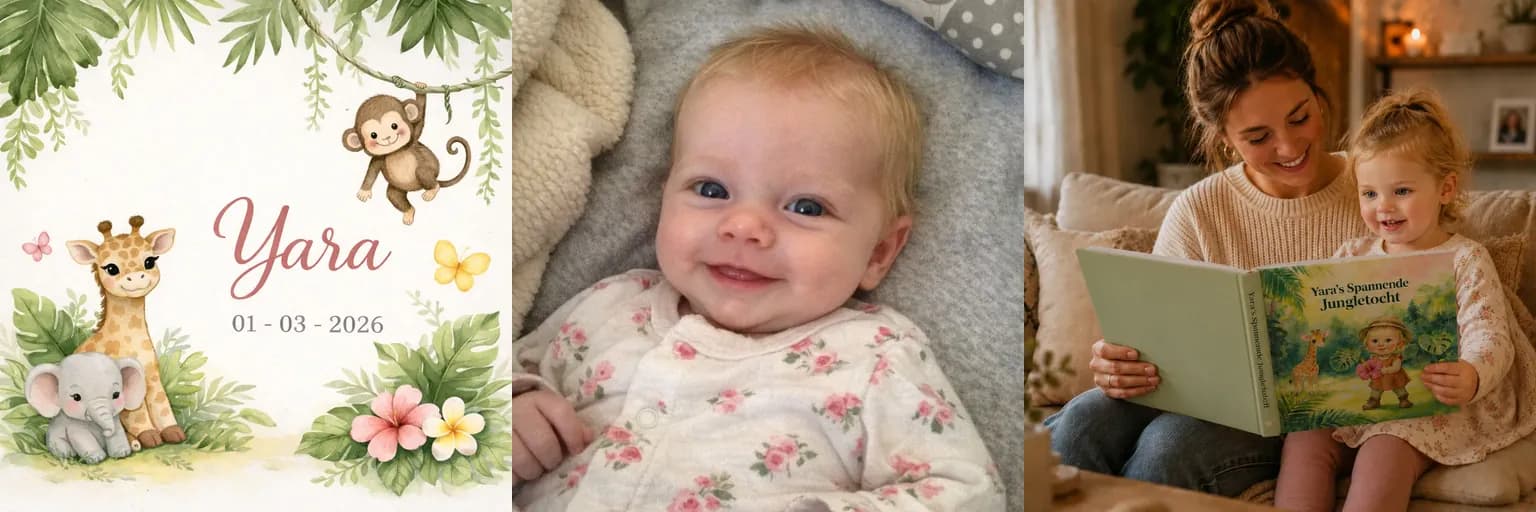
From Birth Announcement to Personalized Children's Book
Turn the colours, illustrations and atmosphere of a birth announcement into a personalized children’s book with your child in the lead role.
Read article→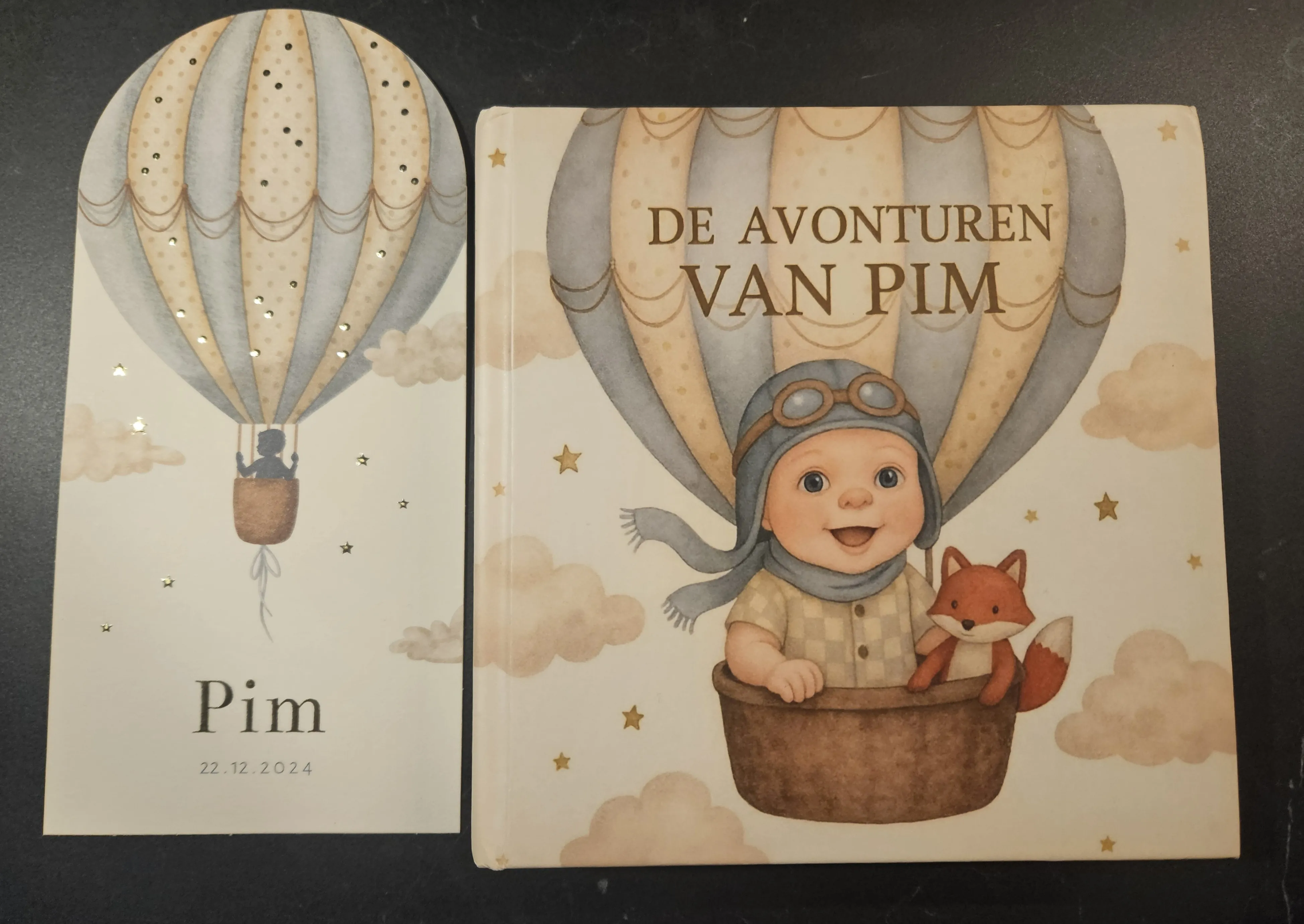
Where It All Began: The Adventures of Pim
The personal story behind BoekjesAtelier: from an early experiment with AI to a platform where everyone can create a personalized children's book.
Read article→